
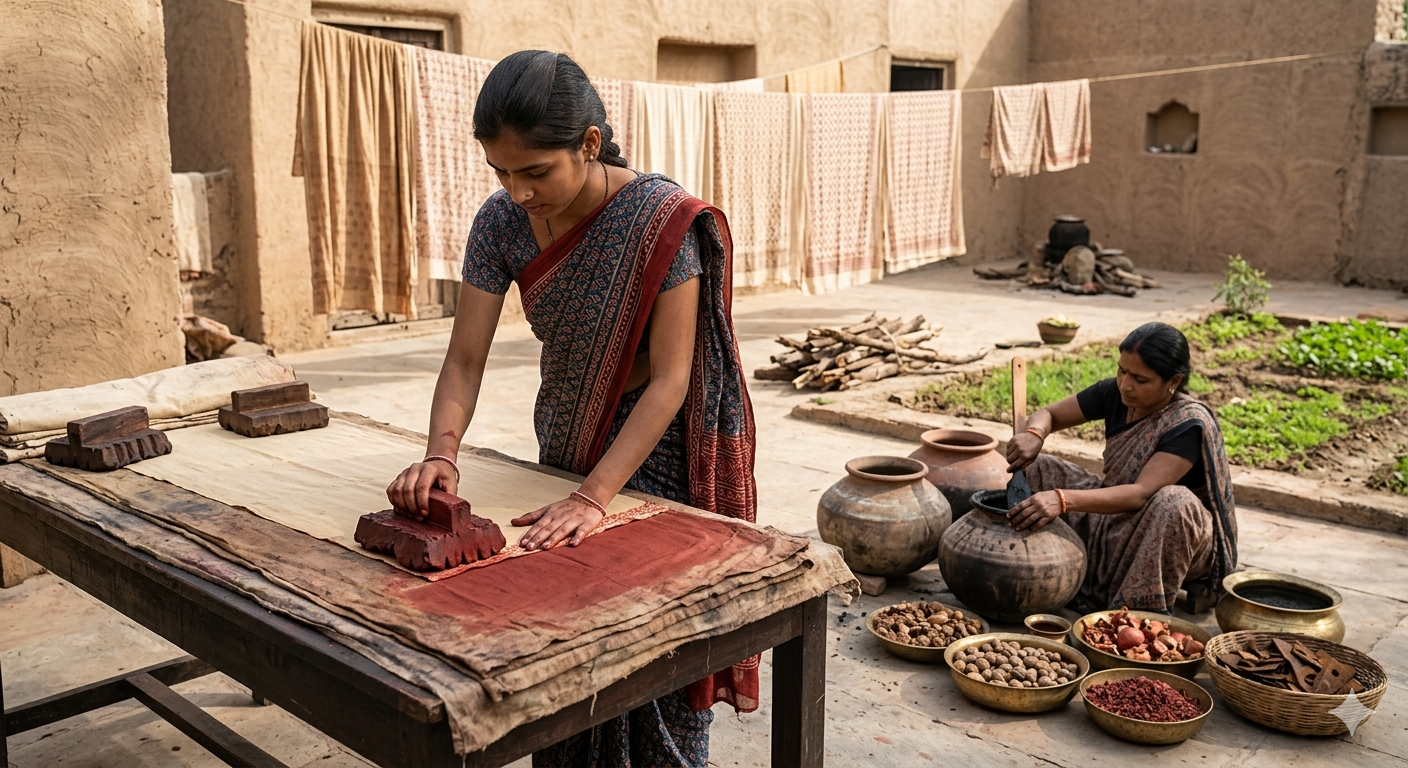
Step into a traditional hand-block printing workshop in Rajasthan, and you will not smell the pungent, harsh chemical fumes characteristic of modern textile factories. Instead, the air carries a deeply comforting, earthy scent—a mix of fermented jaggery, crushed seeds, and damp river mud. For centuries, the master printers of Bagru have rejected synthetic, oil-based colorants. Instead, they rely on a brilliant, complex system of plant-based and mineral-derived alchemy, proving that high-end fashion does not have to come at the cost of our planet.
The Foundation of Pre-Treatment
The journey toward creating a sustainable, handprinted fabric begins long before any color is applied. Raw, unbleached cotton fabric arrives stiff and non-absorbent. To prepare the fibers to lock onto natural colors permanently, artisans use an ancient process known locally as Harda washing.
The fabric is thoroughly soaked in an organic bath made from crushed myrobalan nuts (Terminalia chebula). This fruit is rich in natural tannic acid, which acts as a powerful, bio-based mordant. As the cloth dries under the intense desert sun, it takes on a signature, uniform cream-yellow hue. This underlying tan tint provides the essential chemical foundation that allows natural dyes to bind deeply with the cotton fibers, ensuring the colors remain vibrant and do not bleed during subsequent washes.
Brewing Colors From the Earth
Unlike modern synthetic dyes created in labs, the colors used in traditional block printing are slow-brewed from completely renewable, organic, and mineral sources. Each color requires its own distinct recipe and hours of meticulous preparation:
- The Deepest Black (Syahi): Striking, rich black dye is made through a fascinating upcycling process. Craftsmen ferment rusted iron scraps, such as old nails and horse-shoes, inside large earthen pots filled with water and molasses (jaggery) for over twenty days. The resulting dark liquid is cooked with crushed tamarind seed powder to create a thick, smooth printing paste.
- The Vibrant Red (Begar): The bold, classic reds seen in traditional Rajasthani textiles are derived primarily from madder root (Rubia tinctorum) or Al root. This root is boiled down and mixed with alum, a naturally occurring mineral salt that coaxes out a brilliant, fiery crimson tone.
- The Sun-Kissed Yellow: Bright, cheerful yellows are coaxed from boiled pomegranate rinds (Nasphal) mixed with turmeric or dried marigold petals collected from local temple offerings.
A Fully Circular Ecosystem
What makes this traditional chemistry truly remarkable is its flawless integration into a zero-waste, fully circular production cycle. Every ingredient used in the workshop is biodegradable and sourced directly from nature.
The water used to wash the printed fabrics contains nothing more than dissolved mud, plant juices, and organic starches. Rather than poisoning local water tables like synthetic textile effluents do, this nutrient-dense wastewater is funneled directly into neighboring agricultural fields to nourish crops. In a world desperately searching for solutions to fast fashion’s massive pollution crisis, these master printers offer a time-tested blueprint for true sustainability.










Est tenetur molestiae sed voluptatem Quo nulla optio sequi sit dolorem laborum. Commodi sint minus occaecati est asperiores Non dolores. Id dolores et rerum Reprehenderit voluptatibus sed modi hic.
Eligendi culpa cum sit fficiis inventore nulla non maiores culpa optio ducimus est ullam at nisi ea. Consequatur et culpa accusamus ea. Incidunt velit dicta doloremque repellat quo magnam
Harum et libero debitis ea aspernatur vel est. Vel ab enim eveniet earum
You would want to ensure the plugin is installed and activated for the section to be visible.
In odit sunt sed. Maiores tempora ut ducimus accusantium. Aut voluptatibus et quidem quibusdam ea nisi